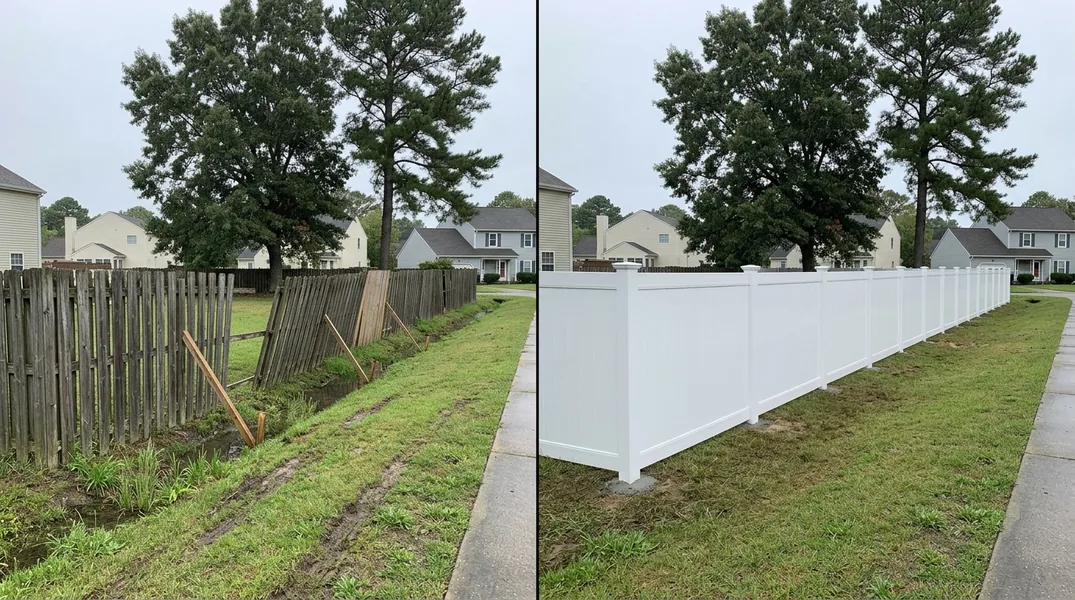
Why Coastal Living Demands a Different Fence Strategy
If you own property near tidal water in Chesapeake, you already know that the coastal environment is beautiful but unforgiving. Salt spray, high humidity, temperature swings, and constant moisture exposure create conditions that can devastate ordinary fencing materials in just a few years. A fence that would last 15 to 20 years inland might deteriorate in half that time near the water.
Choosing the right fence material for a coastal property is not just about aesthetics. It is a practical investment that affects your property's curb appeal, security, and long-term maintenance costs. The three most popular options for homeowners in our area are vinyl, aluminum, and wood. Each has distinct advantages and drawbacks when exposed to salt air and moisture. Understanding these differences will help you make an informed decision that aligns with your budget, maintenance tolerance, and long-term goals.
Wood Fencing in Salt Air: The Traditional Choice with Real Challenges
Wood & Privacy Fence Installation remains popular in Chesapeake because it offers natural beauty, warmth, and a classic aesthetic that many homeowners love. Wood fences blend seamlessly with residential landscapes and provide excellent privacy without the industrial appearance of some alternatives. However, wood fence salt air compatibility is where the real story gets complicated.
Salt spray accelerates wood decay by promoting rot, mold, and mildew growth. The salt deposits corrode the wood fibers and break down protective finishes far more quickly than in non-coastal environments. Even pressure-treated lumber, which is designed to resist rot, will deteriorate faster near tidal water. You will need to seal or stain your wood fence every two to three years in coastal areas, compared to every four to five years inland. Additionally, salt air causes fasteners and metal hardware to rust, which can compromise the fence's structural integrity over time. If you choose wood for a coastal property, budget for consistent maintenance and expect to replace sections or the entire fence sooner than you would in a non-coastal setting.
Vinyl & PVC Fencing: The Low-Maintenance Coastal Solution
Vinyl & PVC Fence Installation has become increasingly popular for coastal properties, and for good reason. Vinyl does not rot, does not require staining or sealing, and resists salt spray far better than wood. The material is essentially impervious to moisture, which means it will not absorb salt water or develop mold and mildew the way wood does. Many vinyl fences installed near tidal water in our region have performed well for 20 to 30 years with minimal maintenance beyond occasional cleaning.
The primary advantage of vinyl in coastal environments is durability combined with minimal upkeep. A simple rinse with fresh water after heavy salt spray exposure is often all the maintenance required. Vinyl does not need to be painted, stained, or sealed. It will not splinter, warp, or develop structural weaknesses from moisture exposure. However, vinyl does have limitations. It is more expensive upfront than wood, and while it lasts longer, replacing a vinyl fence is a significant expense. Additionally, vinyl can become brittle in extreme cold, though this is less of a concern in Chesapeake's relatively mild winters. Some homeowners also feel that vinyl lacks the natural character of wood, though modern vinyl products have improved considerably in appearance.
Aluminum & Ornamental Iron Fencing: The Lightweight Coastal Alternative
Aluminum & Ornamental Iron Fencing offers another option for coastal properties, though it requires careful consideration. Aluminum is lightweight, does not rot, and resists corrosion better than steel. It can be painted and maintains its appearance reasonably well in coastal environments. Many aluminum fences feature powder-coated finishes specifically designed to resist salt spray, which provides an extra layer of protection. The material is also recyclable and offers a more elegant, ornamental appearance than vinyl for homeowners seeking a specific aesthetic.
The challenge with aluminum near tidal water is that it still requires more maintenance than vinyl. While aluminum resists corrosion better than steel, it is not immune to it. Salt spray can eventually cause pitting and degradation of the protective coating, particularly in areas of high salt exposure. Touch-ups and repainting may be necessary every five to ten years, depending on proximity to the water and local weather patterns. True iron fencing, while beautiful, is generally not recommended for coastal properties without extensive protective coatings and regular maintenance, as iron corrodes rapidly in salt air. If you choose aluminum, verify that the finish is rated for coastal environments and understand the maintenance commitment involved.
Vinyl vs Aluminum Fence: Direct Comparison for Coastal Homes
When comparing vinyl vs aluminum fence options specifically for coastal living, the choice often comes down to maintenance expectations and upfront cost. Vinyl wins decisively on the maintenance front. It requires virtually no upkeep beyond occasional rinsing, while aluminum will eventually need touch-ups and repainting. Vinyl also provides better privacy options, as solid vinyl panels are available, whereas aluminum fencing is typically more open and ornamental. For a homeowner who values convenience and long-term durability without ongoing maintenance, vinyl is the stronger choice near tidal water.
Aluminum does have advantages if you prioritize aesthetics or have a smaller budget for initial installation. Aluminum fencing typically costs less upfront than vinyl and offers decorative styles that vinyl cannot match. If your property does not receive direct salt spray exposure (perhaps you are set back from the water or protected by dunes), aluminum may perform adequately with reasonable maintenance. However, for properties in direct proximity to tidal water or areas with heavy salt spray, vinyl consistently outperforms aluminum over a 20 to 30 year lifespan when you factor in the cost of maintenance, repairs, and eventual replacement.
Best Fence Material for Coastal Living: The Honest Verdict
After weighing all three options, vinyl emerges as the best fence material for coastal properties in Chesapeake and surrounding areas. It offers the optimal combination of durability, low maintenance, and long-term value in salt air environments. While the initial pricing is higher than wood or aluminum, the absence of ongoing maintenance costs and the extended lifespan make vinyl the most economical choice over 25 to 30 years. You will not spend weekends repainting, sealing, or replacing rotted sections. Your fence will maintain its appearance with minimal effort, allowing you to enjoy your coastal property rather than maintain your fence.
That said, the best material ultimately depends on your specific situation. If you have a limited budget and your property is somewhat protected from direct salt spray, aluminum with a quality coastal-rated finish may be acceptable. If you are deeply committed to the traditional look of wood and willing to invest in regular maintenance, quality pressure-treated wood with proper sealing can still work, though expect higher long-term costs. The key is understanding the trade-offs and making a decision based on your priorities, budget, and maintenance tolerance. When you are ready to move forward, the team at Chesapeake Fence Company can help you evaluate your property, discuss your options, and find the right solution for your coastal home. Call us at (757) 296-1863 or request a free estimate to discuss your project with our experienced fencing specialists.
Looking for a professional tree service in Chesapeake? Chesapeake Fence Company responds fast for all your fence needs.
Get a Free Quote