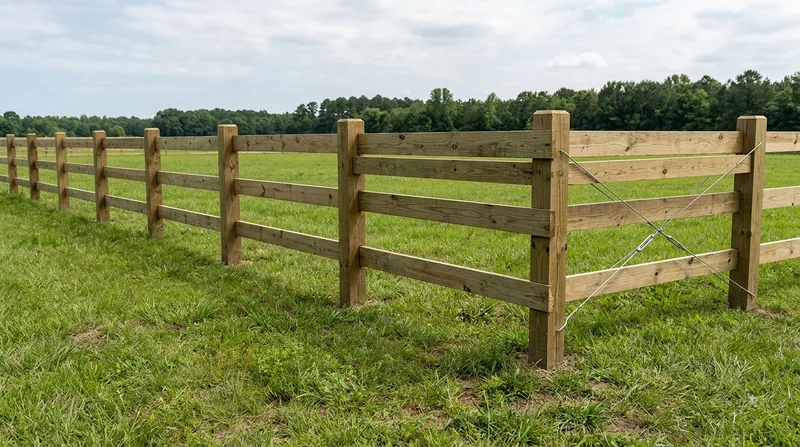




Chesapeake's working agricultural land stretches south through Hickory, Fentress, and along Blackwater Road, where livestock operations, pasture management, and equipment access demand fencing built to withstand real farm pressure. Farm fence installation in Chesapeake is not a weekend DIY project when horses, cattle, or equipment are involved. We build ranch rail fencing, no-climb horse fence, field wire, and pipe fencing on acreage where durability, animal containment, and gate operation are not optional. Since 2013, we have installed and repaired the fencing that keeps working farms running across the city's rural neighborhoods, and we understand the difference between a decorative fence and one that holds livestock and handles seasonal wear.
Why Farm & Ranch Fencing Matters in Chesapeake's Agricultural Areas
Livestock containment is the first job of a farm fence. A horse will test every board and rail; cattle will push against weak posts; gates must swing freely and latch reliably in all weather. Chesapeake's rural neighborhoods depend on fencing that performs year after year without repair calls. Proper post spacing, concrete-set posts, and correct rail dimensions are not cosmetic choices, they are the foundation of a fence that works.
- We install ranch rail fencing with posts set in concrete at industry spacing for maximum strength and minimal sag over time.
- We build no-climb horse fence with mesh or board configuration that prevents hooves from catching on rails.
- We set pipe fencing for equipment gates and high-wear areas where wood would splinter or rot at ground line.
- We install equipment gates with self-closing and self-latching hardware so gates secure automatically after each use.
- We use field wire and wire fencing for pasture perimeter and cross-fencing that keeps animals in and predators aware of the boundary.
A properly built farm fence is an investment that protects livestock, equipment, and the resale value of working property.
Key info: Virginia 811 utility locates are required by law before any digging. We call for locates on every job to protect underground utilities before posts go in the ground. Call 811 or visit call811.com to request a free locate on your property.
How We Build Farm & Ranch Fencing in Chesapeake: Our Process
We start with a walk of your property line and a clear understanding of what the fence needs to do: contain horses, cattle, or both, provide access for equipment, or establish a working perimeter. We work from your existing survey and install on the line you identify. We assess post locations, drainage, and gate placement before we order material or dig a single hole.
- We schedule a free estimate and walk your property to identify the fence line, existing obstacles, and the best post locations.
- We call 811 for a utility locate to mark underground lines before we begin any digging.
- We dig post holes to the depth required for your soil and frost line, spacing posts according to the rail or wire system you choose.
- We set posts in concrete for maximum stability and resistance to animal pressure and seasonal movement.
- We install rails, wire, or boards and attach all hardware, including gates and latching mechanisms.
- We test all gates for swing, latch engagement, and ease of operation before we call the job complete.
The result is a fence that works every day without surprises.
Example: A horse owner in the Hickory area needed a 300-linear-foot perimeter with a 12-foot equipment gate. We installed ranch rail with no-climb mesh on the sides and a cantilever gate operator so the gate opens and closes from the truck. The entire job took 5 days, and the fence has held through two seasons without a single repair call.
For detailed guidance on repair versus replacement, see our page on fence repair in Chesapeake.
Farm & Ranch Fencing Methods and Materials for Chesapeake Properties
| Method | Description | Best for |
|---|---|---|
| Ranch Rail (Wood) | Horizontal rails notched into posts, typically 2x6 or 2x8 pressure-treated or cedar, set 12 to 18 inches apart depending on animal type. | Horses, cattle, and visual appeal on working farms. Durable and repairable rail by rail if damage occurs. |
| No-Climb Horse Fence | Ranch rail with welded wire mesh or no-climb board overlay, preventing hooves from catching between rails and reducing injury risk. | Horse containment where safety is the priority. Mesh is galvanized or powder-coated for rust resistance. |
| Pipe Fencing | Steel pipe welded or bolted into posts, galvanized or powder-coated to resist rust. Ideal for gates and high-stress sections. | Equipment gates, loading areas, and sections exposed to livestock pressure or weather. Lasts decades with minimal maintenance. |
| Field Wire & Pasture Fencing | Woven wire or wire fencing attached to posts with tension bands and stretcher bars, galvanized for corrosion resistance. | Pasture perimeter, cross-fencing, and predator deterrent. Economical for large acreage and easy to extend or modify. |
| Split Rail Fencing | Rustic hand-split or milled rails set in post mortises, pressure-treated or cedar, offering a traditional farm aesthetic. | Visual definition of property lines and traditional farm character. Lower animal containment rating, often paired with wire for security. |
Each method is chosen based on the animals you keep, the terrain, the gate requirements, and your budget. We help you match the right system to your actual needs.
Farm & Ranch Fencing Cost in Chesapeake: What to Expect
Ranch rail and no-climb horse fence typically start at $12 to $18 per linear foot, depending on rail dimension, post spacing, and whether wire mesh is included. Pipe fencing runs $15 to $25 per foot. Field wire for pasture fencing may be $8 to $12 per foot. Equipment gates add $500 to $2,500 depending on size and automation. A 300-foot perimeter with ranch rail and a 12-foot equipment gate might run $4,500 to $6,500 before equipment gate operation.
The cost of your job depends on post spacing, rail dimension, terrain (rocky or clay soil affects digging time), existing obstacles, and gate complexity. We recommend getting two or three estimates so you understand what is included at each price. Visit our pricing overview for a detailed breakdown of costs by method and material.
Call us at (757) 296-1863 for a free estimate. We respond within 24 hours and walk your property before giving a number.
Farm & Ranch Fencing Near Me: What Chesapeake Homeowners Should Know Before Hiring
Hiring the right contractor matters when you are building a fence that has to work. Ask for references from other farm or ranch customers, not just residential fence jobs. Check that your contractor is fully insured and an AFA Member Installer (American Fence Association). Ask how they handle post-setting, whether posts are set in concrete or tamped earth (concrete is the standard for livestock fencing), and what warranty they offer on labor and materials.
If your property is in a master-planned community or governed by an HOA, check the architectural guidelines for fence height, material, and color before you commit. Some HOAs restrict ranch rail or require board-on-board privacy fencing. Verify with the Chesapeake building department whether a permit is required for your fence height and location. We work with your HOA guidelines and handle permit applications if required. Contact us at our contact page to schedule a free estimate and discuss your property's rules.
We have been building fences in Chesapeake, Norfolk, Virginia Beach, and the surrounding area since 2013. We are fully insured and an AFA Member Installer. We stand behind our work and return calls the same day.
Farm & Ranch Fencing in Chesapeake: Pricing Guide
| Service | Price | Details |
|---|---|---|
| Ranch Rail Fencing (pressure-treated or cedar) | Starting at $12/ft | Horizontal rails set in notched posts, spaced 12-18 inches apart for livestock containment and durability |
| No-Climb Horse Fence (ranch rail plus mesh overlay) | Starting at $16/ft | Ranch rail with galvanized or powder-coated mesh to prevent hoof entrapment and increase safety for equine |
| Pipe Fencing (steel, galvanized or powder-coated) | Starting at $18/ft | Welded steel pipe for equipment gates and high-stress areas, minimal maintenance, decades of service life |
| Field Wire & Pasture Fencing (woven wire, galvanized) | Starting at $8/ft | Wire fencing for perimeter and cross-fencing, economical for large acreage, easy to extend or modify |
| Equipment Gates and Automation | $500 to $2,500 | Gate cost depends on size, cantilever versus V-track design, and whether a linear operator is included |
| Estimate and Site Visit | Free | We walk your property, identify the fence line, assess terrain and obstacles, and respond within 24 hours |
Indicative pricing, the exact cost depends on square footage, finish, and site access. Free personalized estimate within 24h at (757) 296-1863.


